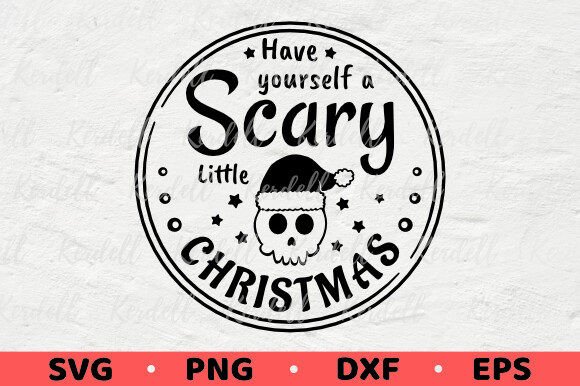
Have Yourself a Scary Little Christmas Embroidery Review
When I sit down to evaluate a new digital embroidery file, I am rarely looking for perfection. I am looking for viability. Can this design survive the hoop? Will it hold up after twenty washes? Does it translate well from a screen to fabric? Today, I am putting Have Yourself a Scary Little Christmas through that exact gauntlet. As an experienced designer and reviewer, I have seen countless holiday designs flood the market, most of which are overly complex or visually muddy when stitched. This particular piece, categorized under Illustrations, promises a specific mood—one that blends seasonal cheer with a touch of gothic whimsy. But does it work in practice?
First Impressions and Visual Personality
The moment you load the file into your digitizing software, the layout of Have Yourself a Scary Little Christmas tells a story. It is not just text; it is an illustration. The typography likely carries weight, perhaps paired with skeletal hands, spooky ornaments, or dark botanical elements that define the "scary" aesthetic without crossing into horror. For the handmade product creator, this distinction is vital. A standard holiday font feels generic; an illustrated concept feels like a brand statement.
Mood-wise, this design leans into the cozy yet eerie vibe that has become increasingly popular in boutique fashion. It appeals to the customer who wants to celebrate the holidays but rejects the traditional red-and-green clichés. Visually, the balance seems intentional. The negative space appears sufficient to prevent the stitch density from becoming overwhelming, which is a common pitfall in lettering-heavy files. If the artist has used a mix of satin stitch for outlines and fill stitch for background elements, the texture will read clearly even on smaller garments. However, the success of this look relies heavily on thread selection. A matte cotton thread might soften the edges too much, whereas a polyester rayon will make those illustrative details pop with necessary sheen.
Real-World Application: From Screen to Stitch
Let’s move away from theory and talk about actual production. Imagine you are preparing inventory for an upcoming craft fair or restocking your Etsy seller shop for the peak season. You decide to apply Have Yourself a Scary Little Christmas to a heavyweight cotton canvas tote bag. This is a classic use case for commercial embroidery. On a structured bag, the design will lay flat and maintain its shape. The "scary" theme works exceptionally well here because tote bags often serve as extensions of personal identity. Wearing this design signals a sense of humor and a distinct aesthetic preference.
Another strong candidate is the sweatshirt. Whether you are targeting teenagers or adults who appreciate alternative fashion, placing this design on the chest or pocket area of a charcoal grey or black hoodie creates immediate visual interest. The contrast between dark fabric and bright or metallic threads can elevate the perceived value of the item. It transforms a basic garment into a custom apparel piece that commands a higher price point. Furthermore, for embroidered patch applications, this design could be digitized with a dense edge so it can be ironed onto denim jackets or beanies, expanding its utility beyond direct-to-garment stitching.
However, we must consider the nursery market. While "scary" might sound contradictory to baby items, there is a growing niche for "dark academia" or quirky nursery decor. A subtle version of this design on a muslin swaddle or a crib bumper could stand out in a sea of pastel florals. Yet, caution is advised here. The interpretation of "scary" must remain playful. If the imagery includes anything too grotesque, it will alienate the primary buyer demographic: new parents.
Where to Exercise Caution
No design is universal, and Have Yourself a Scary Little Christmas is no exception. There are specific scenarios where this file may struggle. First, avoid using this on highly textured fabrics like chunky knits or bouclé wool. The needle penetration required for detailed illustrations will cause distortion, and the fabric surface will obscure the fine lines of the artwork. Similarly, thin fabrics such as silk or lightweight jersey require heavy stabilizer backing, which can create a stiff, uncomfortable feel—especially problematic for baby embroidery items that need to remain soft against sensitive skin.
Curved surfaces present another challenge. Attempting to stitch this design on a baseball cap or a curved hat brim requires precise hooping and possibly a multi-head machine with advanced alignment tools. If the design contains intricate corners or small lettering, these areas are prone to puckering if the tension is not perfectly calibrated. Additionally, while the design is likely optimized for standard hoop size limitations, always verify the dimensions before committing to large-scale projects like pillow covers or blankets. If the design is too wide, you may find yourself dealing with awkward seam allowances or misaligned centering.
Finally, consider the washing durability. Designs with high stitch counts can sometimes trap lint or lose definition over time if low-quality thread is used. For craft business owners selling finished goods, longevity is key. A design that looks great on day one but frays by month three will damage your reputation. Ensure that the underlay stitches are robust enough to anchor the top stitches securely.
Practical Designer Notes for Execution
Before you rush to produce your first batch of personalized gifts, follow these essential steps to ensure professional results:
- Test on Scrap Fabric: Always run a test stitch on the exact fabric you plan to sell. Colors render differently on cotton versus polyester, and texture affects how the eye perceives detail.
- Check Thread Contrast: Use a high-contrast thread palette. If the design features light colors on dark fabric, ensure the thread opacity is sufficient to cover the base material completely.
- Review Stitch Density: Zoom in on the digital preview. Are there any areas where the running stitch crosses over itself unnecessarily? Excessive density leads to bulkiness and potential needle breakage.
- Inspect Small Details: Look closely at any tiny graphical elements. Will they disappear when stitched? If a detail is smaller than 3mm, it may not register clearly on a finished product.
- Black and White Mockups: Convert your design preview to grayscale. This helps identify if certain colors blend together too much, losing the structural integrity of the illustration.
- Stabilizer Selection: Match your stabilizer to the fabric weight. A cut-away stabilizer is usually best for stretchy materials or long-term wear, while tear-away may suffice for stable home decor items.
- Licensing Verification: Confirm the license terms. Even if you own the digital embroidery file, some licenses restrict commercial use or limit the number of units you can sell. Always check before listing your small shop product.
Final Verdict on Value and Appeal
Ultimately, Have Yourself a Scary Little Christmas offers a unique angle in a saturated market. It moves beyond generic holiday greetings into the realm of character-driven design. For the creative entrepreneur, this means higher engagement. Customers are drawn to designs that tell a story or evoke a specific emotion. When presented correctly—with proper stabilization, quality thread, and thoughtful placement—this design can significantly boost the appeal of your embroidery project.
It performs best when integrated into a cohesive brand identity. Pair it with moody photography, minimalist packaging, and products that align with its aesthetic. Whether you are creating a limited edition run of holiday embroidery shirts or adding a signature touch to your online store, this file provides the visual punch needed to stand out. Just remember: the magic lies not just in the file, but in the execution. Test thoroughly, choose your materials wisely, and let the design speak for itself.